GARCÍA DE POU
More than 22,000 pallets, 5 stacker cranes, and a warehouse that no longer holds back growth.
Garcia de Pou entrusted us with the task of fully automating its intralogistics process at Ordis, from the receipt of goods to the final shipment to each customer.
The industry’s largest catalog is useless if the warehouse can’t keep up.
Garcia de Pou’s strength has always rested on three pillars: a comprehensive catalog, consistently available inventory, and lightning-fast order fulfillment. The problem was that its shipping facility in Ordis was beginning to jeopardize the very things that set the company apart.
García de Pou
It all began in 1884, when Luis García and Francisca de Pou opened a paper bag workshop and a printing shop. Five generations later, that small printing shop has become Garcia de Pou, Spain’s pioneering company in single-use non-food products, with the most extensive catalog on the market for the hospitality and restaurant industries.
The Challenge
Garcia de Pou needed to increase its storage capacity without gaining extra space, by optimizing what it already had to the fullest. Added to that was the need to improve agility in order fulfillment, in a business where the speed of picking and delivery is part of the value proposition.
The most pressing issue: the shipping warehouse was on the verge of becoming a real bottleneck, capable of bringing everything else to a standstill if action wasn’t taken in time.

Limited storage capacity

Expedition ship as a bottleneck

Agility Required in Order Fulfillment
The solution
from ULMA
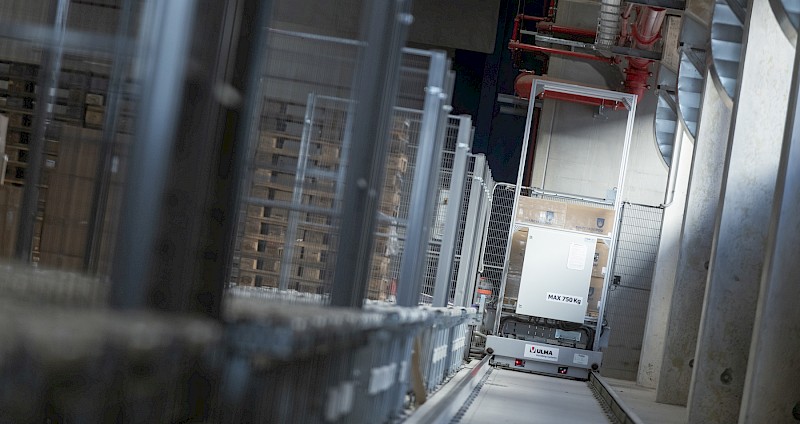
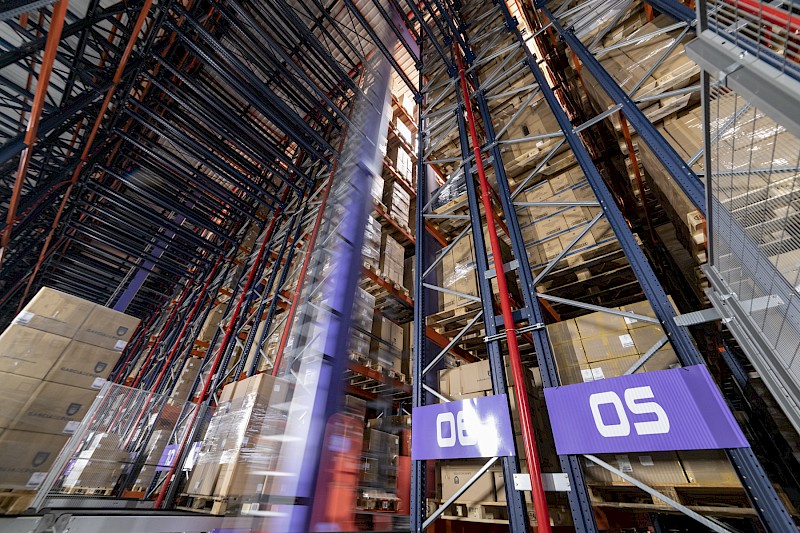
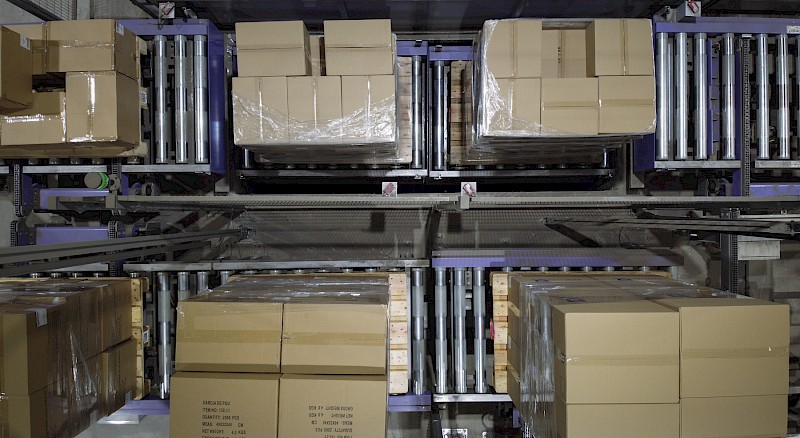
We got right to work on the entire process, from start to finish. The automated transport system collects supplies for the hospitality and restaurant industries—both in-house and from external sources—and delivers them directly to an automated self-supporting pallet warehouse, managed by five DAIFUKU Unit Load stacker cranes capable of storing more than 22,000 pallets.
To ensure that order picking wouldn’t be the usual bottleneck, we set up several workstations based on the “Goods-to-Person” model: the product is transported to the operator, prepared, consolidated, and shipped out the door on its way to each customer.
The result
Storage space was maximized, productivity and efficiency soared in both order fulfillment and shipping, and—thanks to a design built for growth—the facility was ready for whatever came next.

Automated Self-Supporting Warehouse

"Good to Person" Model

Flexible design for future expansions
Testimonial
"Automation of both warehouse processes and other areas of the company is a must for Garcia de Pou. Implementing automation leads to improved quality, reduced time and costs, and, consequently, increased customer satisfaction,"
Gerard Caula
Director of Operations and Process Improvement
"It has allowed us to optimize and increase storage capacity, automate the picking of low-turnover boxes, and improve both order fulfillment time and capacity."
"ULMA's team, its technology, and its extensive experience in a wide range of logistics projects were key factors in our decision. They quickly understood our needs, supported us, and provided recommendations starting from the pre-sales phase, presenting us with a detailed and competitive proposal that ultimately led us to choose ULMA as our logistics partner."
"The automation project has enabled us to achieve the objectives set when defining the scope. We have succeeded in improving the ratios of cubic meters prepared per hour, average preparation time, and cubic meters stored per square meter of space."